AI on the Chain: How Decentralized AI Networks are Changing Data Ownership and Model Training
by LCX Team · December 3, 2025
The global conversation around Artificial Intelligence (AI) has shifted from awe to anxiety, primarily due to the concentration of power. A few tech giants control the vast data silos, the immense computing resources, and the opaque, centralized AI models that govern much of our digital lives.
This imbalance is exactly what Decentralized AI (DAI) networks, built on the foundations of Web3 and blockchain technology, are setting out to fix. By distributing the key pillars of AI—data, computation, and governance—these networks are heralding a new era of user sovereignty and trustworthy AI.
Reclaiming Data Ownership: The Birth of Data Sovereignty
In the traditional centralized AI model, users trade their personal data for ‘free’ services. This data is aggregated, anonymized (sometimes poorly), and used to train models that ultimately benefit the corporation, not the individual who generated the data.
Decentralized AI fundamentally flips this script by establishing data sovereignty, ensuring individuals retain full control over their digital information.
- Data Stays Local: Instead of sending massive, sensitive datasets to a central cloud server, DAI networks use techniques like Federated Learning
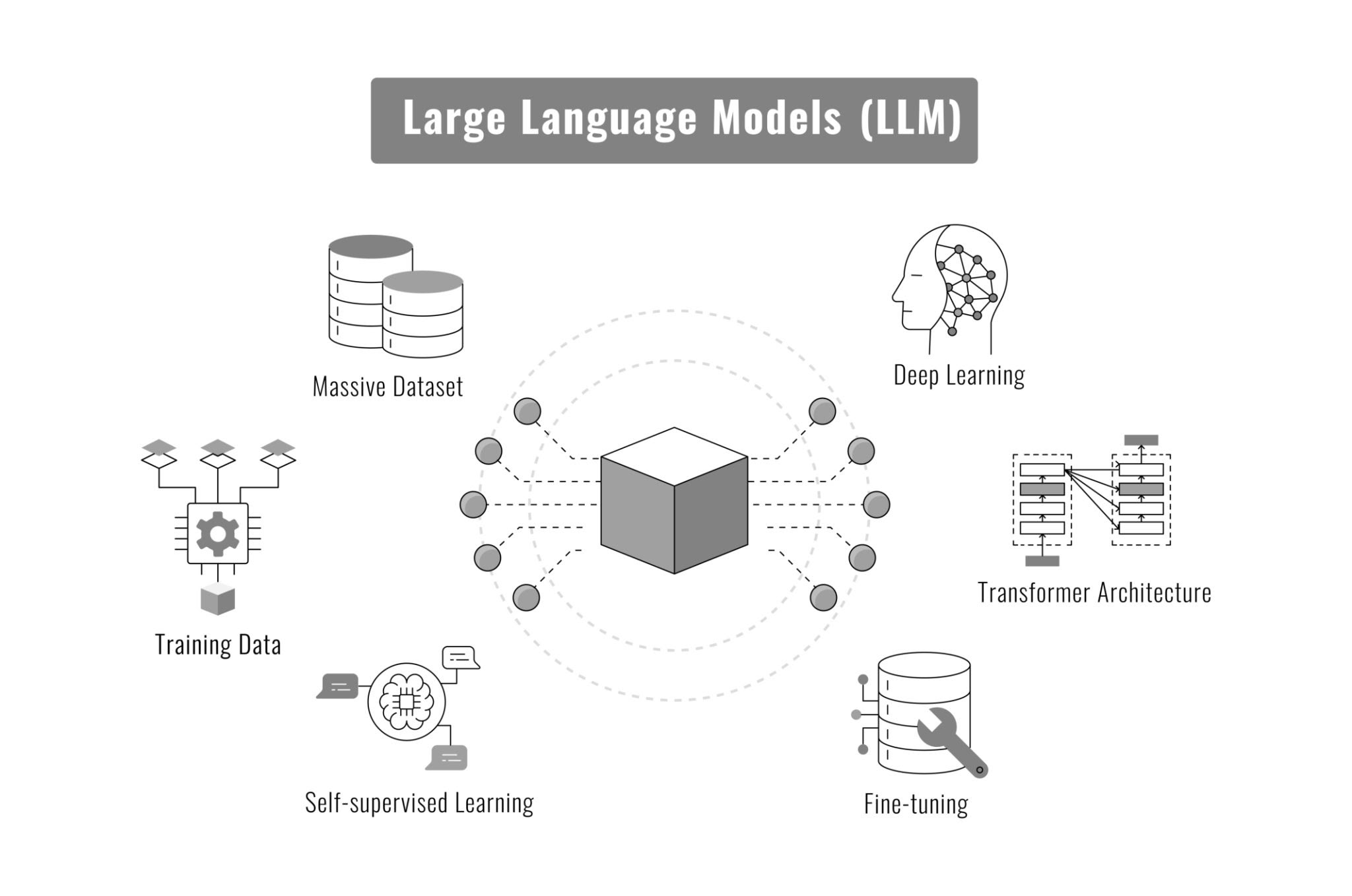
and Edge Computing. The data stays on the user’s local device (smartphone, computer, or IoT device), significantly reducing the risk of a single point of failure or a massive data breach.
- Privacy-Preserving Computation: AI models are sent to the data, not the other way around. The model is trained locally on the user’s data, and only the model updates (or “weights”) are shared back to the network. Techniques like Differential Privacy add statistical noise to these updates, making it impossible to reverse-engineer and identify the original user’s private data.
- Monetization and Transparency: Blockchain’s immutable ledger records precisely how and when a user’s data is accessed or contributes to a model. This traceability allows for a transparent and auditable system where users can be compensated for their data contributions via tokenomics—receiving crypto tokens for providing valuable information or compute power.
Revolutionizing Model Training: Collaborative, Secure, and Auditable
The process of training sophisticated AI models requires enormous compute power and massive, diverse datasets. Centralized systems restrict this to a privileged few. Decentralized networks democratize it, making the training process more robust, secure, and fair.
1. Democratizing Compute Power
DAI networks allow anyone with unused compute power (like idle GPUs) to contribute to the training of large AI models.
- Shared Infrastructure: This peer-to-peer approach creates a global, distributed supercomputer. Projects like Render Network (for decentralized rendering) and various decentralized AI platforms incentivize individuals to run a “node” and contribute their hardware, offering a cost-effective alternative to expensive cloud services.
- Increased Resilience: By spreading the computation across hundreds or thousands of nodes, the system becomes highly resilient and eliminates the risk of a single point of failure that plagues centralized data centers.
2. Preventing Bias and Tampering
A major flaw in traditional AI is the problem of “data poisoning,” where malicious actors can tamper with the training data to introduce biases or compromise the model’s integrity.
- Verifiable Provenance: Blockchain provides an immutable audit trail for the entire model lifecycle, from the data source to the final training update. Every step and contribution can be cryptographically verified, ensuring the model was trained on authentic, untampered data.
- Fairer Models: By aggregating contributions from diverse, decentralized sources, the training data becomes more representative of the real world, which can help reduce inherent biases often found in models trained on homogenous, centralized corporate data.
The Core Technologies Enabling Decentralized AI
The synergy between AI and Web3 relies on a stack of core technologies:
|
Technology |
Role in Decentralized AI |
|
Blockchain/DLT |
Provides an immutable, transparent ledger for recording data access, model updates, and transaction/reward payments via smart contracts. |
|
Federated Learning |
A machine learning technique that allows models to be trained across multiple decentralized edge devices without exchanging the raw data. |
|
Smart Contracts |
Automate governance and incentives (tokenomics). They automatically distribute rewards to data providers and compute contributors upon verifiable completion of a task. |
|
Decentralized Storage |
Solutions like IPFS or Filecoin secure the vast datasets and complex AI models across a network, ensuring no single entity can censor or delete them. |
The Future: Autonomous AI Agent Economies
The ultimate vision of AI on the chain is the creation of Autonomous AI Agent Economies. Projects like SingularityNET and Fetch.ai are building marketplaces where AI services are modular and open.
In this ecosystem:
- Different AI models (e.g., a face recognition model, a language processing model, and a financial forecasting model) are separate, tokenized services.
- Autonomous Economic Agents (AI programs) can interact, discover, and pay each other in crypto tokens for data, compute, or specialized services, all managed by smart contracts.
- This creates a dynamic, self-organizing economy of AI services that operates outside the control of any single corporation, making AI development more open, collaborative, and ultimately, more ethical.
The shift to Decentralized AI is not just a technological upgrade; it’s a philosophical movement aimed at democratizing the most powerful technology of our time, ensuring that the benefits and control of AI rest with the many, not the few.