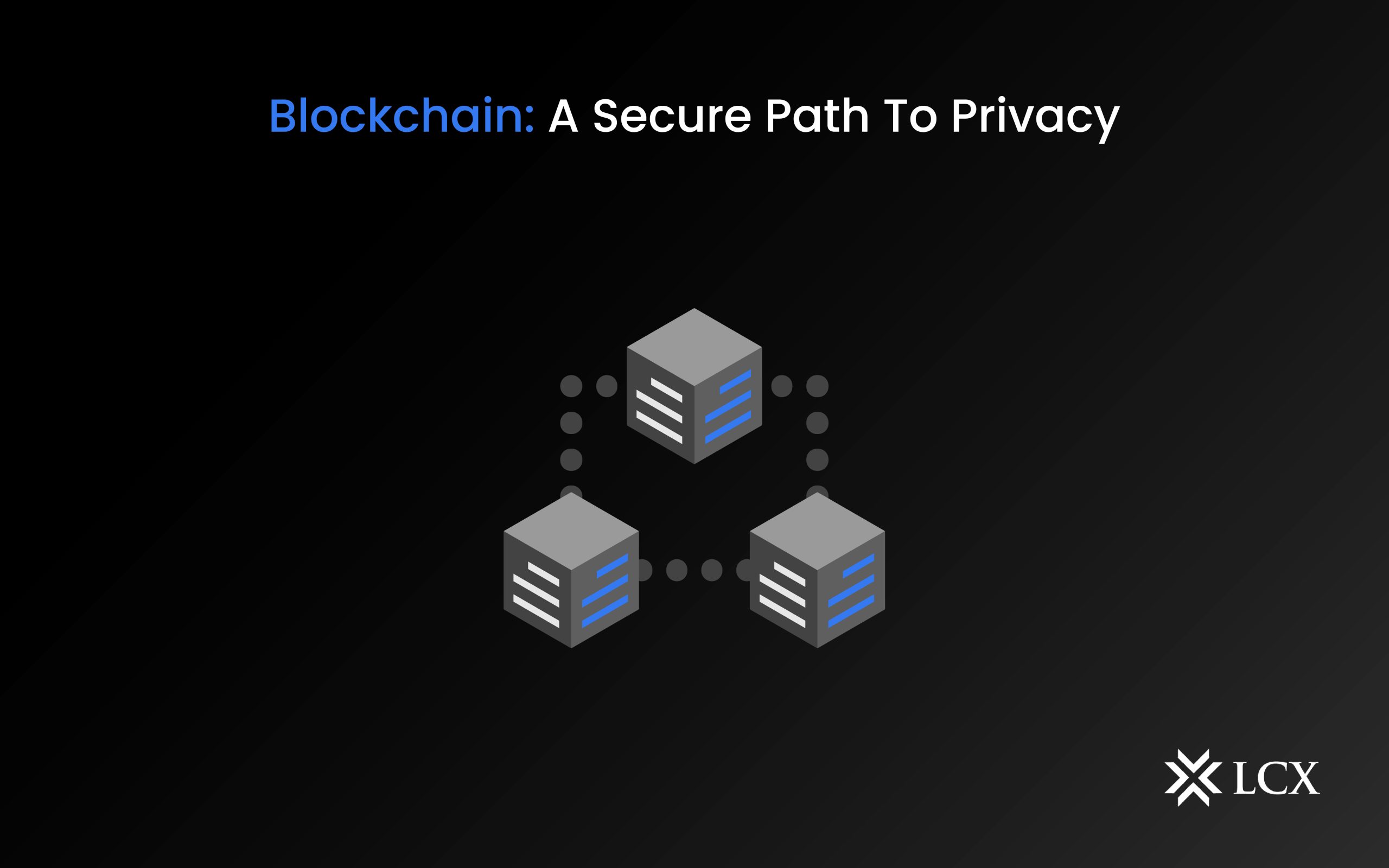
Blockchain: A Secure Path to Privacy
by LCX Team · · Updated February 23, 2023
Data privacy and security are the pillars of modern society and are under threat in the age of the internet. Technology has eroded our walls of privacy. But blockchain technology provides a secure way of storing and managing data. It creates a decentralized system, where all the data is stored across multiple nodes, which makes it nearly impossible for a hacker to tamper with the data. The data stored on the blockchain is also protected by advanced encryption, making it incredibly difficult for anyone to hack into the system and steal or corrupt the data.
Moreover, each block of data is verified and authenticated by the network, ensuring that no unauthorized changes are made to the data. The decentralized nature of blockchain technology also ensures that the data cannot be erased or deleted, providing a robust and immutable record of transactions. All of these features work together to create a highly secure and transparent data management system that is virtually unhackable.
The Blockchain’s Advantage: Secure, Immutable Solution for Data Protection
Blockchain technology has the potential to revolutionize the way we handle data privacy and security. At its core, blockchain is a decentralized, distributed ledger that allows for the secure and transparent storage of information. Blockchain is not controlled by one single entity, and no one entity can access or alter data stored on the blockchain without the permission or knowledge of the network.
As the name suggests, a blockchain is a chain of digital blocks that contain records of transactions. The blocks are linked to each other, which makes it difficult for the hacker to alter the data within a single block. The difficulty of accessing the data isn’t the only deterrent for hackers. Blockchain technology itself has some inherent characteristics that provide additional means of security as they are based on consensus, cryptography, and decentralization principles.
The digital block records on the blockchain are secured through cryptography. In cryptography, each person in a network gets a private key through the transactions they make. This key is like their own signature. The benefit of the key is that if a digital block record is altered, the signature will be invalid. As a decentralized and peer-to-peer distributed network, the data blocks are continuously updated and kept in sync without a localized or centralized point of failure.
Public and Private Blockchain: A Comparison
Presently, there are mainly two types of blockchains: public and private, with a number of variations in both. Public and private blockchains differ in a few ways that affect the level of privacy and security offered by them. Public blockchains utilize the computers attached to the public internet network to validate the transactions and add them to the blocks on the ledger. Private blockchains only permit known organizations to join and enable the formation of a kind of private, members-only business network.
The difference at the surface level might not seem much, but it has significant implications in terms of where and on which chain the potentially confidential data is stored and who has access to it. The public blockchains run on the principle of implied anonymity, whereas the private blockchains would require the verification of the members to confirm identity and approve access to additional privileges of the private blockchain network.
The two blockchains also differ in the verification processes of their respective transactions. On the public blockchain, the users verify transactions through the concept of data mining. As the private blockchain runs on the principle of a permissioned network, the verification of data on the block can be achieved through a process called “selective endorsement,” where only known users verify the transactions. The advantage of this for businesses is that only participants with appropriate access and permissions can maintain the transaction ledger.
Blockchain Network: Insight Into Security Challenges
Even if you have the most up-to-date technology, that doesn’t mean you’re completely safe if the holes aren’t found and fixed. Blockchain relies on massive real-time data transfers, and the data can sometimes be intercepted by hackers on its way to ISPs (Internet Service Providers). Also, when it comes to mining, large public blockchains require a lot of processing power. But a group of dishonest miners can take over the ledger if they can pool enough money to buy more than 50% of the mining power on a blockchain network. However, a 51 percent attack cannot take control of a private blockchain. Blockchain is also susceptible to sybil and phishing attacks.
Conclusion: What We Learned
Blockchain is addressing the issues of data privacy and security, which seem like luxuries in these modern, technology-influenced times. The blockchain’s many security measures give its users confidence in its honesty. Every day, we discover new applications for blockchain technology. Blockchain technology has the potential to transform the IoT world as we know it!